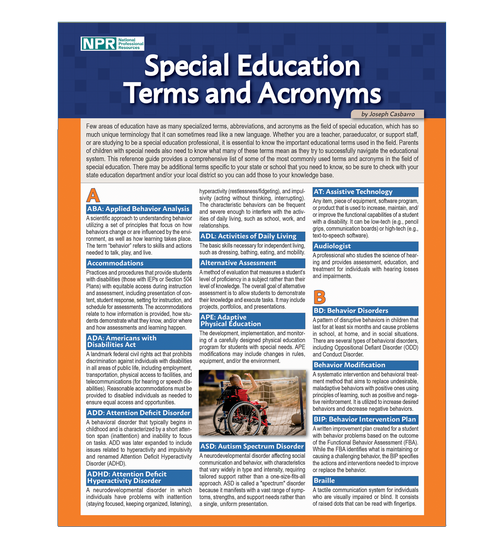


Product Overview
Shared leadership in special education is often described as collaboration, but collaboration does not answer the questions that stall organizations: who may decide, who owns the work, whose expertise must be consulted, and who must be told. Using eight lessons, a staffing case, four ready-to-use tools, and a ten-statement self-audit, Dr. David F. Bateman shows school and district leaders how to turn good intentions into an operating model.
Shared leadership is not the distribution of blame. It is the deliberate distribution of authority, workflow ownership, expertise, and communication.
An elementary principal needs a half-time special education teacher. The director sends the request to cabinet, human resources asks whether the director approved it, finance asks the principal for a recommendation, and three weeks later no one has decided. Everyone touched the request, but no one was named to decide it. Capable people working hard still produce delays, duplication, contradictory messages, and decisions made by the wrong group when roles are unclear.
Shared Leadership: Decision Rights, Handoffs, and Leadership Architecture in Special Education is a laminated quick-reference guide by David F. Bateman, PhD. It treats shared leadership as an organizational design problem, not a call to cooperate. The guide separates four roles that districts often blur (decide, recommend, consult, and inform) and shows how to build decision rights, principal–director agreements, handoffs, escalation paths, meeting boundaries, and backup coverage around them.
The guide also keeps legal authority in its proper place. It explains what IDEA and Section 504 assign to the IEP Team and the Section 504 group, and what remains for districts to design locally: who prepares the information, who resolves a scheduling conflict, who approves a position, and who acts when a principal and central office disagree. Internal resource planning supports implementation; it never predetermines what a student receives.
The guide draws on IDEA and Section 504 regulations, including 34 C.F.R. §§ 300.321(a)(4), 300.323(d), 104.7, and 104.35(c), along with research on inclusive principal leadership and district-level inclusive leadership.
Laminated for durability and built for use at the table where roles, handoffs, and approvals are settled. Not a textbook to read once, but a reference leaders keep at hand.
What's Inside
Coordinated Authority, Not Shared Ambiguity
- Why no single administrator controls every part of a student's program, and why the answer is explicit forms of responsibility, not making everyone responsible for everything
- The four roles districts blur: who is authorized to decide, who owns the workflow, whose expertise must be consulted, and who must be informed
- Core principle: shared leadership is the deliberate distribution of authority, workflow ownership, expertise, and communication
The Legal Baseline
- A three-column table of common questions, who or what should answer each, and the leadership implication
- Covers the IEP Team, Section 504 group decision-making, building schedules, and district resources
- Federal law identifies decision-makers; districts design the operating model without moving a student-specific decision away from the legally required team
Lesson 1: Define Decision Rights, Not Just Job Descriptions
- A decision-rights matrix for six recurring decisions, naming the decider, workflow owner, consult/inform roles, and the boundary beyond which no one may act alone
- Prevents both underreach, when everyone waits, and overreach, when someone decides what belongs to another person or team
- The decision-rights test: "Who moves this work?" and "Who has authority to decide it?"
Lesson 2: Build a Principal–Special Education Director Operating Compact
- Reciprocal commitments for the principal and the director, plus the joint work they share
- How to bring central office a framed decision request instead of a vague problem transfer
- Keeping special education inside core building leadership, not beside it
Lesson 3: Separate Deciding, Recommending, Consulting, and Informing
- A four-role vocabulary, with the question each role answers and an example
- The language rule: replace "Can you handle this?" with "I need your decision," "I need your recommendation," "I need your technical advice," or "I am informing you of the outcome"
Lesson 4: Design Handoffs So Work Does Not Disappear Between Levels
- A six-field handoff: issue, decision needed, authority, relevant facts, recommendation, and return point
- How to keep handoffs proportionate, so routine building issues are not escalated and central office does not return issues simply because they began in a school
Lesson 5: Keep Management Decisions and Student-Team Decisions in the Right Rooms
- A table of five groups (building leadership team, IEP Team, Section 504 group, district cabinet, and PLC) showing what belongs in each and what should not be decided there
- Why internal resource planning must not become a pre-meeting decision about what a student will receive
- The meeting-boundary question: "Can this group actually make this decision?"
Lesson 6: Use Escalation to Reach Authority, Not to Transfer Ownership
- When to escalate, when not to, and what the person who escalates still owns
- How to avoid upward delegation, where leaders send decisions higher to avoid owning them
Lesson 7: Eliminate Single Points of Failure
- A continuity table covering building leadership, IDEA procedural expertise, Section 504 coordination, evaluation, related services, and district resource decisions
- Backup design that names who keeps the process moving, who holds temporary authority, and where the procedure is documented
A Leadership Case: The Staffing Request That Had No Decider
- A composite district in which a half-time position request touches four offices and is decided by none
- A five-step path from framing the need to return and implementation, with a role and an output for each step
Lesson 8: Build Meeting Architecture Around Decisions
- Six design questions that give each recurring meeting a defined decision space
- A meeting should end with a decision, a recommendation, or a clear statement that the matter belongs elsewhere
Tools Leaders Can Use Immediately
- The Decision-Rights Matrix: list 10 recurring decisions that currently create confusion and test the matrix with four roles
- The Principal–Director Operating Compact: six questions to settle together
- The Six-Field Handoff Card
- The Single-Point-of-Failure Test: five functions, a named backup for each, and a check that the backup can explain what they would do tomorrow
- The Shared Leadership Self-Audit: ten statements, with scoring guidance
- Final takeaway: shared leadership is an operating system
Who It's For
- Principals and assistant principals
- Directors and coordinators of special education
- Section 504 coordinators
- Superintendents, cabinet members, and central-office leaders
- Human resources and finance partners who support special education staffing
- District leadership teams building decision rights, handoffs, and succession plans
Pairs Well With
|
Title |
Item # |
Pairs well with this guide because… |
|---|---|---|
|
Difficult Conversations and Collaborative Problem-Solving |
CDCD |
Once roles and decision rights are clear, this guide helps leaders handle the conflict, behavior, and parent-disagreement conversations that test them. |
|
Supporting Instruction Together |
CSIT |
Applies the same clarity about who owns what to the classroom, helping principals support SDI and IEP implementation with the director and case managers. |
|
What Really Happens in Due Process |
CDUE |
Shows what happens when no one owns a handoff or a decision, and a concern that was never resolved ends up in a hearing. |
|
CDDI |
Keeps the IEP Team's decisions strong and well documented while leaders build the administrative system around them. |
About the Author
David F. Bateman, PhD, is a principal researcher at the American Institutes for Research (AIR) and a former professor in the Department of Educational Leadership and Special Education at Shippensburg University of Pennsylvania, where he taught courses on special education law, assessment, and IEP implementation. He is a former due process hearing officer for Pennsylvania, having served in more than 580 hearings, and he helps school districts apply what he knows about special education litigation to provide appropriate supports for students and to avoid, and recover from, due process hearings.
A former classroom teacher of students with learning disabilities, behavior disorders, intellectual disability, and hearing impairments, Bateman earned his PhD in special education from the University of Kansas. He is co-author of A Principal's Guide to Special Education, A Teacher's Guide to Special Education, and Special Education Leadership: Building Effective Programming in Schools.
Order From
Order From: National Professional Resources
Item #:
Email: Orders@nprinc.com
Phone: 800-453-7461
Fax: 239-631-2259
Web: www.NPRinc.com
Also available from: CASE (Council of Administrators of Special Education), www.casecec.org/case-store